
Review · SWEDEN NORTHERN LIGHTS TOURS
The Ultimate Aurora Photo Adventure
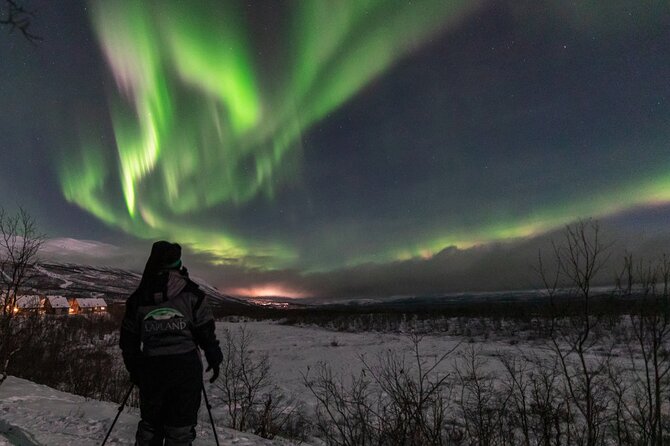
The northern lights never follow a schedule. That uncertainty is part of the appeal of this four-hour outing in Abisko National Park, where you search the Arctic sky with an experienced aurora guide. I like the included DSLR camera and tripod, which save you from packing specialist gear, and I like the choice of three search styles: walking to a nearby teepee, riding in a 4×4 van, or taking a snowmobile sleigh to a wilderness camp.
The small-group limit of eight should make the evening personal, and guides such as Michelle, Fabian, Ane, Anna, Gavin, Félix, and Romy have earned praise for patient camera help and lively stories about Lapland. The main caution is simple: seeing the aurora is never guaranteed, and some departures may spend much of the night in one spot, especially when clouds or wind limit the options.
Key points to know before booking
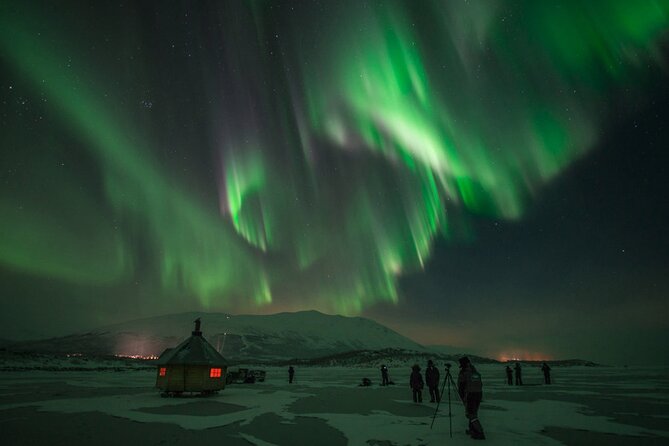
- Three possible ways to search: Depending on the forecast, you may walk to a nearby teepee, ride in a modern 4×4 van, or travel by snowmobile sleigh to a wilderness camp.
- Camera gear is supplied: You receive a preset DSLR camera, lens, tripod, backpack, warm overalls, and head lamp.
- Bring your own SD card: The cameras do not include memory cards. A minimum of 4 GB is recommended, and a 32 GB card can be purchased for 250 SEK.
- Pickup covers Abisko and Björkliden: Transfers are included from hotels in both areas, with return to the meeting point.
- Hot drinks and snacks help with the cold: Coffee, tea, hot lingonberry juice, and snacks are included, though timing can vary.
- The weather controls the evening: Poor weather can lead to a new date or full refund, but an ordinary cloudy night may still go ahead.
Why Abisko is such a good aurora base
Abisko sits in Swedish Lapland, close to the mountains and within Abisko National Park. It is prized for its tendency toward clear skies, a major advantage when your entire evening depends on a view upward.
That does not make Abisko a magic switch. Clouds, wind, snow, and weak aurora activity can still spoil the show. The guides can choose a better nearby position or adjust the plan, but no one can manufacture green lights above the trees.
The setting does add something beyond the photographs. You spend the night outside in a quiet Arctic environment, hear stories about Lapland and the natural forces behind the aurora, and get a reason to stay outdoors even if the sky refuses to cooperate. On one less successful evening, the group made snowmen and tried light painting with head lamps. That is not the same as seeing the northern lights, but it shows how a good guide can keep the night from becoming three hours of staring at clouds.
More Northern Lights Photography Tours in Sweden
- Kiruna Northern Lights Tour with Photographer
★ 5.0 · 735 reviews - Kiruna: Northern Lights Tour with Photos
★ 4.9 · 333 reviews - Abisko Northern Lights Tour with Photographer
★ 5.0 · 104 reviews
Meeting at STF Abisko Turiststation
The listed meeting point is STF Abisko Turiststation, Abisko Turiststation 2. The activity begins at about 7:45 p.m., with pickup from Abisko hotels between 7:30 and 7:45 p.m. If you stay in Björkliden, pickup is at 7:15 p.m.
You should be in your hotel lobby at the stated time rather than waiting in your room. This is a winter outing, and a missed transfer could be especially awkward in the dark and cold.
The return is scheduled for 11:30 p.m. at the earliest. It may be later if the aurora becomes active or if the group spends extra time searching. I would keep the following morning flexible, especially if you have a train, flight, or early tour.
Round-trip transfer is included from hotels in Abisko and Björkliden. That is useful in a small Arctic settlement, where you may not want to walk along dark roads in winter clothing while carrying a tripod.
Three ways to chase the aurora
The most interesting feature is the flexible format. The guide chooses among three approaches based on the weather and aurora forecast.
Walking to the nearby teepee
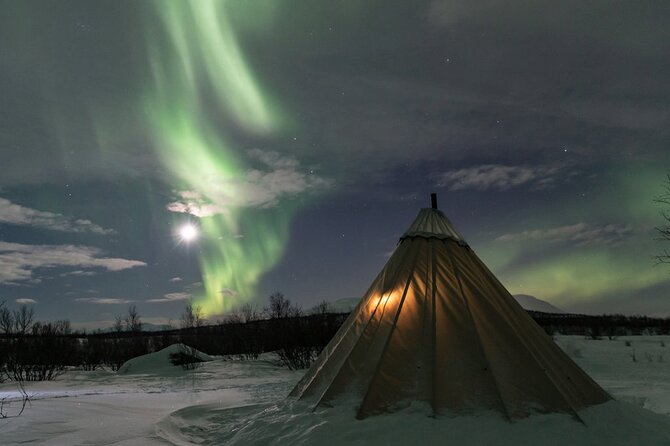
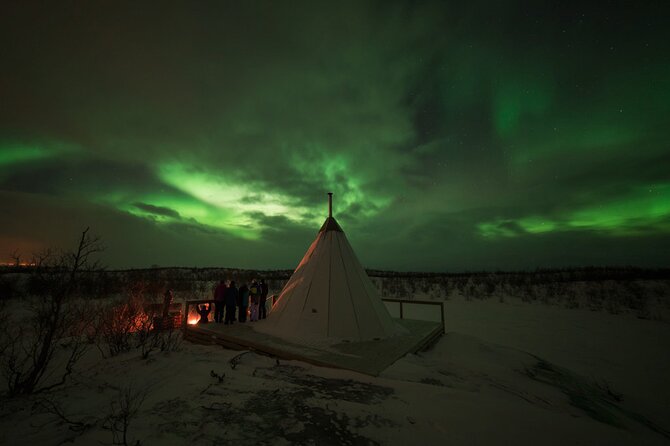
A short outing on foot may lead to a teepee near Abisko. The campfire gives you a place to warm up, and coffee, tea, hot lingonberry juice, and snacks make the waiting easier.
This option has a clear benefit: less time is spent loading into vehicles, so more of the evening can go toward setting up cameras and watching the sky. It also creates a friendly camp atmosphere, with the fire acting as a natural meeting point.
The drawback is location. If the guide uses a spot close to STF Abisko Turiststation, the setting may feel less adventurous than the description suggests. One account found the nearby position too similar to simply stepping outside the hostel. If you are already staying at STF with your own camera, you may question the value of paying for a guided outing that remains close by.
Same place, a different way to chase them:
- From Kiruna: Abisko National Park Northern Lights Tour
★ 4.4 · 462 reviews - Northern Lights Tour from Kiruna to Abisko with Dinner
★ 5.0 · 311 reviews - Abisko: Guided Aurora Chase with Hotel Transfers
★ 4.5 · 311 reviews - Kiruna: Northern Lights Tour with Stejk Street Food Dinner
★ 4.9 · 231 reviews
Riding in a 4×4 van
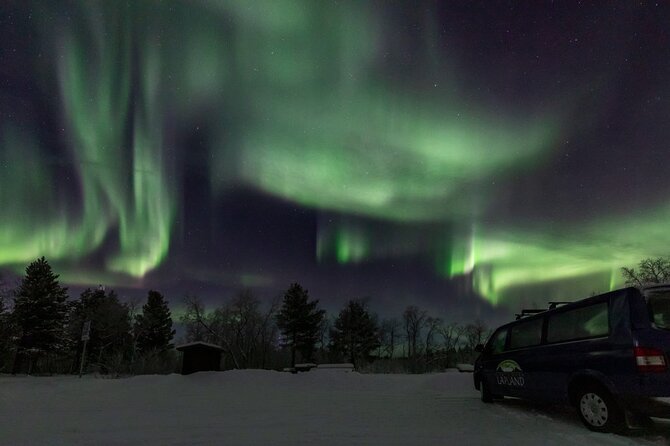
A 4×4 van lets the guide search around Abisko National Park rather than wait at one fixed point. That can be useful when clouds cover one area but not another, though the information provided does not promise a long-distance chase or multiple stops.
A vehicle also gives you a warmer way to move through the night. On the other hand, road time cuts into the four-hour activity, and a cloudy sky can still follow you wherever you go.
Taking the snowmobile sleigh
The snowmobile-pulled sleigh is the most distinctive option. It can carry you to one of the wilderness camps, where darkness may be stronger and artificial light weaker.
A sleigh ride adds a real Lapland flavor to the outing, but it does not improve the aurora forecast by itself. One successful evening included a sleigh ride to a very dark location, followed by camera instruction and time beneath the stars. If this is your chosen format, dress for still, exposed cold and use the provided warm overalls as part of your plan.
Using the supplied DSLR and tripod
You do not need to arrive with a professional camera. The operator supplies a DSLR camera and lens preset for northern lights photography, along with a tripod, backpack, warm overalls, and head lamp.
The guide gives a short explanation of the basic skills needed to find and photograph the aurora. That is a strong feature for beginners. You can concentrate on framing and timing instead of trying to guess every setting in the dark.
The equipment is shared by the booking arrangement, so confirm how the camera is allocated if you are booking for more than one person. The supplied information specifically promises camera rental and a tripod, but it does not state that each person receives a separate camera.
Bring an SD card. This is the most important practical tip. The cameras do not include memory cards, and the recommended minimum is 4 GB. A 32 GB card is available for purchase for 250 SEK, but buying one in advance is simpler and avoids using precious time on site.
A tripod matters because aurora photographs require the camera to remain still during longer exposures. Even a modern phone can produce surprising results in good conditions, but the provided DSLR should give a beginner a better chance to learn how night photography works.
Guides make the biggest difference
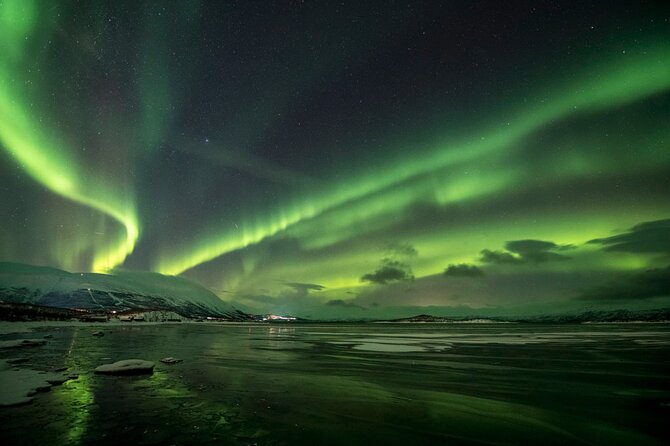
The strongest part of this experience is the human side. Guides have been praised for helping each person set up the camera, keeping the fire going, explaining the aurora, and sharing stories about Lapland.
Michelle receives particular praise for helping everyone get good photos, explaining the lights, and adding playful light effects to images. Fabian is described as determined and informative, including an evening when the group eventually photographed the aurora after an uncertain start. Romy has been praised for looking after the group and tending the fire, while Anna received warm comments for her friendly approach.
A good guide cannot control the clouds, but can control the mood and the practical details. That means showing you how to focus, reminding you about the tripod, helping you avoid wasted shots, and giving you something useful to do while you wait.
The guide may also explain why the aurora appears, how solar activity affects it, and what you are seeing above the horizon. Those details give meaning to a faint green glow that might otherwise seem like a camera trick.
What happens when the sky refuses to cooperate
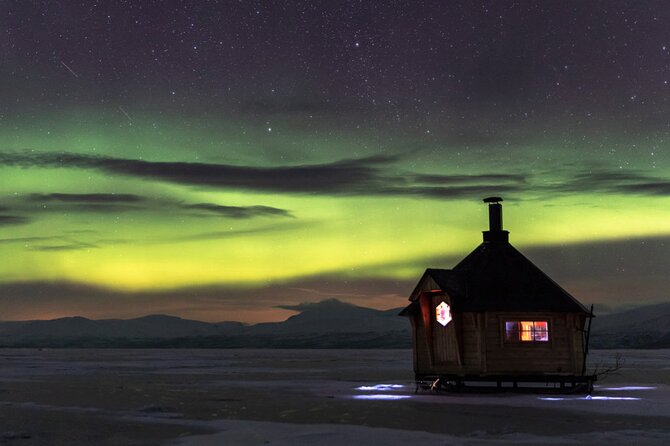
This is the part to consider carefully. Some outings produce excellent pictures. Others produce clouds, wind, truck lights, or only a weak green glow.
One difficult evening involved three hours in the same location with little to photograph. Another included a snowstorm at a frozen lake before returning to the teepee area, but no aurora appeared. In these conditions, the campfire, juice, stories, snowmen, and light painting can soften the disappointment, but they cannot replace the main attraction.
The standard cancellation terms help when the operator cancels because of poor weather. You can choose another date or receive a full refund. If you cancel, you need to do so at least 24 hours before the start time for a full refund.
That policy is different from a disappointing but technically usable evening. If the tour runs and the clouds later block the sky, the supplied information does not promise a free repeat visit or refund. If you have several nights in Abisko, ask about flexibility before booking and consider placing this activity early in your stay.
Group size, comfort, and cold-weather details
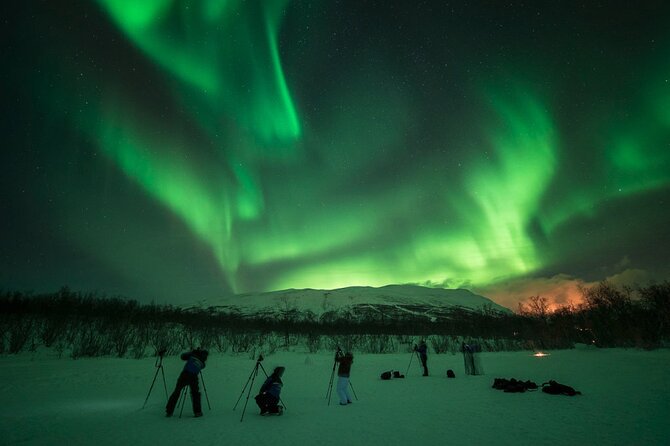
The planned maximum is eight people, which is a sensible size for camera coaching. A smaller group means less time waiting for help and less chance of blocking one another’s view.
There is an important point to clarify at booking: one account describes a group of 15, despite the stated maximum of eight. That may have been an unusual departure or a change in operating arrangements, but it is worth confirming if personal instruction is central to your decision.
Warm overalls and a head lamp are included. Heavy-duty Arctic boots are not included, though they are available to rent during the tours. Regular winter footwear may not be enough for a long wait in snow, especially if you are standing still beside a tripod.
Bring layers, gloves that let you handle camera controls, and a hat. The supplied clothing helps, but winter comfort depends on what you wear underneath and on your footwear.
Hot drinks and snacks are included, but do not expect a constant supply throughout the night. One account describes them being served mainly at the end for about 10 to 15 minutes. Think of the refreshments as a welcome warm-up, not a full evening meal.
Is $183.07 a fair price?
At $183.07 per person, this is not a cheap way to look at the sky. You are paying for more than aurora access: hotel pickup, a guide, camera and tripod rental, warm overalls, a head lamp, refreshments, and the chance to use a teepee, 4×4, or sleigh format.
The price makes better sense if you do not own suitable photography gear or if you want instruction. Buying or transporting a DSLR, lens, and tripod for one night could be inconvenient, especially if you are traveling light.
The value drops if you already have a camera, are staying near the meeting point, and are comfortable finding a dark spot on your own. The aurora itself is free, and a strong display may be visible without a tour. One disappointing evening produced better personal pictures at no cost from nearby accommodation, which is a fair warning for experienced photographers.
For a first aurora trip, I see the fee as payment for preparation and support rather than a guarantee of results. The best value comes when the guide finds clear skies, teaches you to use the camera, and creates a comfortable night outdoors.
Who should book this evening?
I would recommend it to a first-time aurora photographer, a visitor without cold-weather camera gear, or anyone who wants a guide to handle the search plan. Families and small groups may also appreciate the included clothing, transfer, and simple camera setup.
It suits you especially well if you have two or more nights in Abisko. That gives you another chance if the first evening is cloudy and reduces the pressure on one four-hour outing.
I would hesitate if you already know how to photograph the aurora, carry your own tripod, and are staying within easy reach of a dark viewing area. I would also think twice if you have only one night in Abisko and cannot accept the possibility of paying for an evening with no lights.
Final verdict: a useful photo lesson, not an aurora guarantee
The Ultimate Aurora Photo Adventure combines practical support with a memorable Arctic night. I like the supplied DSLR, the choice of transport, the pickup service, and the guides’ strong role in helping beginners get usable photographs.
The experience is at its best when the group stays small, the guide finds clear skies, and the aurora appears. It is less convincing when the group is larger than promised, the outing stays beside the accommodation, or clouds make the photography impossible.
Book it for the guidance, equipment, and chance to reach a dark setting. Do not book it as a guaranteed ticket to green skies. Bring an SD card, rent proper boots if needed, keep your schedule flexible, and reserve early if the date matters, since it is commonly booked about 22 days ahead.
FAQ
Where does the aurora photo adventure begin?
It begins at STF Abisko Turiststation, Abisko Turiststation 2, 981 07 Abisko, Sweden.
Is hotel pickup included?
Yes. Round-trip pickup is included from all hotels in Abisko and Björkliden.
What time is pickup?
Pickup from Abisko hotels is between 7:30 and 7:45 p.m. You should be in your hotel lobby by 7:30 p.m. Pickup from Björkliden hotels is at 7:15 p.m.
When does the activity end?
The earliest return time is 11:30 p.m. It may be later depending on aurora activity.
Is camera equipment provided?
Yes. The package includes a DSLR camera, lens, tripod, backpack, warm overalls, and head lamp.
Do I need to bring an SD card?
Yes. SD cards are not included. A minimum of 4 GB is recommended, and a 32 GB card can be purchased for 250 SEK.
Are Arctic boots included?
No. Heavy-duty Arctic boots are available to rent during the tour, but they are not included in the listed package.
What happens if bad weather cancels the tour?
If the operator cancels because of poor weather, you can choose a different date or receive a full refund. If you cancel, you must do so at least 24 hours before the start time for a full refund.
Just added around Sweden
- Northern Lights Photo Expedition Dinner Included from Abisko★ 5.0 · 59 reviews
- Husky Sled Ride Northern Lights Tour from Kiruna★ 5.0 · 43 reviews
- Autumn Abisko Aurora Chase★ 5.0 · 67 reviews
- Aurora Car Chasing Tour with Photographer★ 5.0 · 17 reviews
- Magical Northern Lights Photography Tour Kiruna★ 4.5 · 30 reviews
- Guided Northern Lights Tour at Kiruna★ 3.5 · 28 reviews
- Arctic Adventure with Reindeer and Northern Lights Hunt 18:30 pm★ 4.5 · 20 reviews
- Aurora Tour with Dinner in Abisko★ 5.0 · 15 reviews
Sweden Northern Lights Tours, compared.
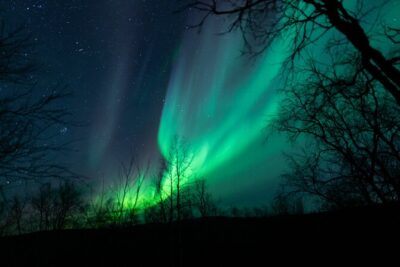
Northern Lights Tour from Kiruna to Abisko with Dinner
Read our review →Northern Lights Tour with Stejk Street Food Dinner
Read our review →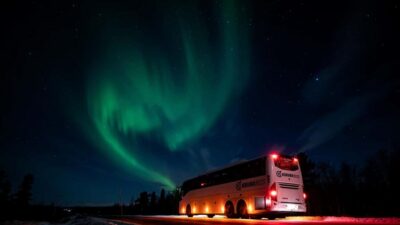
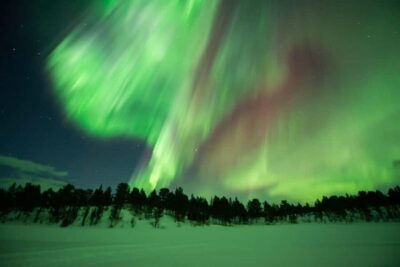
Sami-Inspired BBQ Dinner with Northern Lights Chase
Read our review →Browse the lists this tour appears in