
Review · FAIRBANKS NORTHERN LIGHTS TOURS
From Fairbanks: Arctic Circle Northern Lights Full-Day Trip
The road north rewards patient travelers. This 14-hour trip from Fairbanks combines the Arctic Circle, Yukon River, Finger Mountain, and the Trans-Alaska Pipeline with a nighttime hunt for the Northern Lights. I like the way it joins major Alaska sights in one long outing, and I especially like that guides such as Paul, Ash, and Ryan add stories, photos, snacks, and steady driving to the journey.
The Arctic Circle certificate gives the day a fun, concrete goal, while the pipeline and Yukon River stops add real substance beyond simply sitting in a van. The main drawback is the length: you leave around 1 PM and may not return until about 3 AM, and the Dalton Highway can be rough, cold, and tiring.
Key points at a glance
- Cross the Arctic Circle at 66.5622° north: Stop for photos and receive a certificate marking the occasion.
- See the Trans-Alaska Pipeline up close: Learn how this 800-mile crude oil pipeline was built and consider its effect on the land.
- Reach the Yukon River and Finger Mountain: Enjoy scenery, snacks, hot drinks, and possible wildlife sightings along the route.
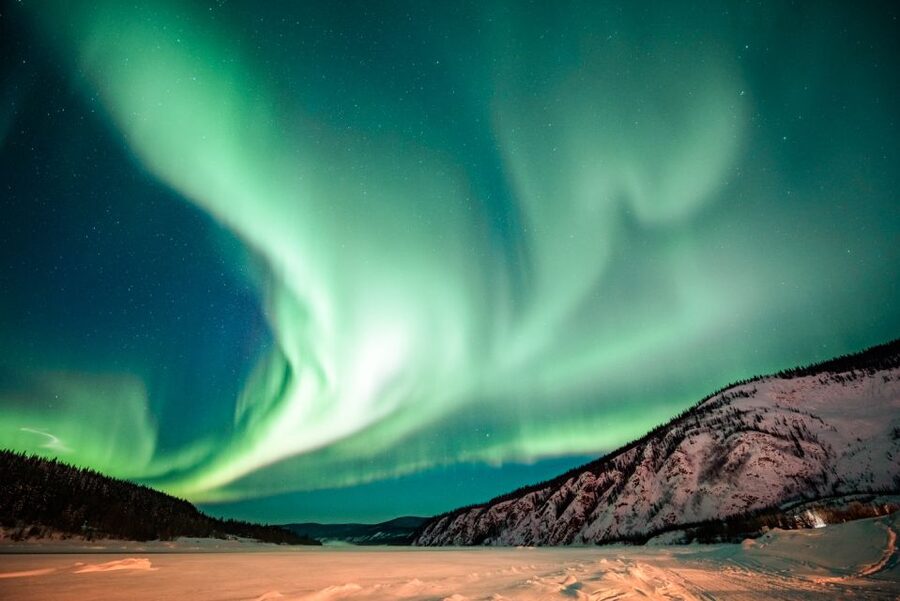
- Spend the return drive hunting the Aurora Borealis: Guides may stop more than once when the sky begins to glow.
- Expect a demanding 14-hour day: The trip can stretch to 15 or 16 hours, especially when aurora stops run late.
- Plan for real winter conditions: Bring serious cold-weather clothing, and remember that the Northern Lights cannot be guaranteed.
What this Fairbanks Arctic Circle tour is really like
This is not a quick photo stop north of Fairbanks. It is a full road expedition on the Dalton Highway, with long stretches in the vehicle and several worthwhile breaks. You are picked up at a major hotel in Fairbanks around 1 PM, then spend the afternoon heading north before reaching the Arctic Circle later in the evening.
The schedule works well for one reason: you see the northern sights in daylight or twilight, then use the dark return trip for the Aurora hunt. In winter, however, much of the route may be dark before you reach the Circle. In summer and early fall, you get better views of the road and scenery, but the Northern Lights are not usually the main event in the same way they are from late fall through spring.
I would think of this as two tours joined together. The first half is an Alaska road trip with engineering, rivers, mountains, and northern geography. The second half is a patient search for a natural event that may appear for a few minutes, several hours, or not at all.
More Full-Day Trips in Fairbanks:
- South Iceland Highlights and Northern Lights Combo Full-Day Tour
★ 4.5 · 15 reviews
Leaving Fairbanks for the Dalton Highway
The tour provides pickup and drop-off at major hotels within Fairbanks city limits. It does not pick up at Airbnbs or private residences, so you need to arrange a hotel meeting point if your accommodation falls outside the pickup area.
The vehicle matters on this route. Several people praised the drivers for handling icy, snowy, and gravel-covered roads safely, but some found the vans less comfortable than they hoped. Complaints included worn seat cushioning, squeaks, poor insulation, and cold interiors. One person reported frosted windows during a March trip, while another found the bus unusually cold during a December outing.
That is useful information, not a reason to cancel. The Dalton Highway is a rough road, and a clean, luxury coach would not change the surface beneath it. Still, a long ride magnifies every small problem. If you have back trouble, motion sensitivity, or little patience for bumpy roads, think carefully before booking.
Your guide is a major part of the experience. Paul received especially warm praise for his humor, extra snacks, photo help, and calm winter driving. Ash was valued for his Alaska stories and persistence in finding breaks in cloudy weather. Ryan, Jake, Colleen, Elijah, Connie, and Kirk were also praised for keeping the long journey interesting and making passengers feel safe.
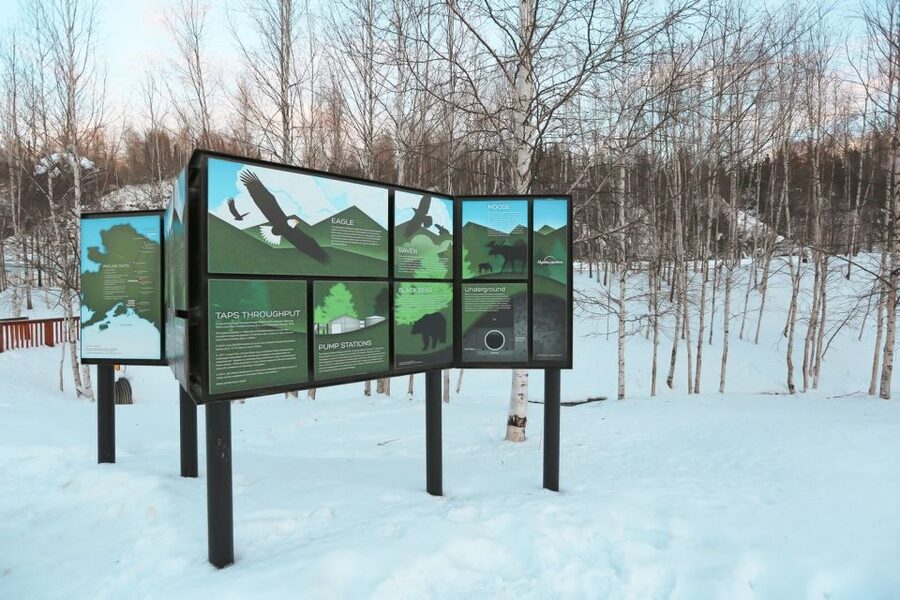
The Trans-Alaska Pipeline, a lesson beside the road
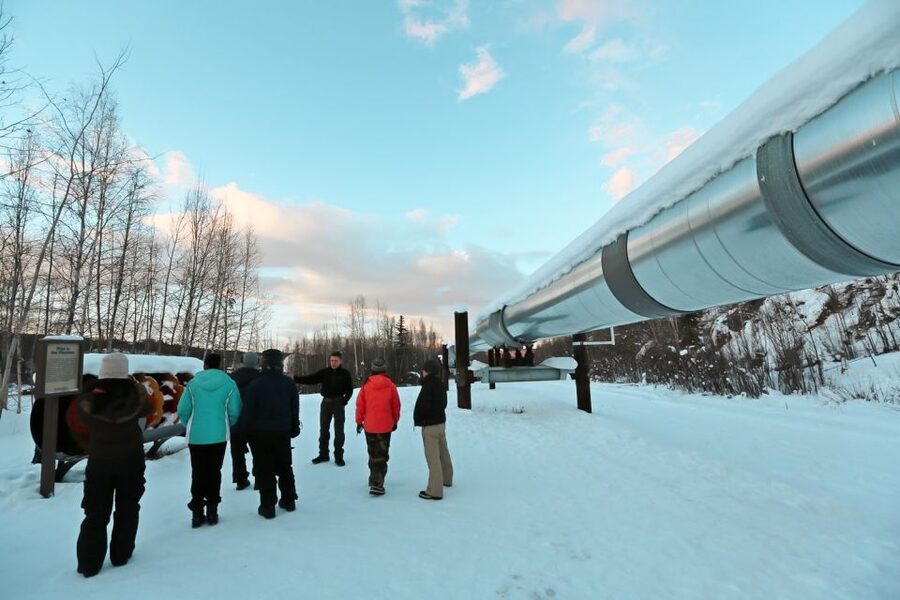
The pipeline stop is easy to underestimate. At first glance, it is simply a large metal structure beside the highway. With a good explanation, it becomes one of the most useful stops of the day.
The Trans-Alaska Pipeline carries crude oil across roughly 800 miles, or 1,287 kilometers, of Alaska. You learn about the engineering and construction challenges involved in moving oil across difficult northern ground. You also get a chance to think about the pipeline’s costs and effects, rather than treating it as just another photo prop.
I like this stop because it gives the drive a clear subject. You are not merely passing through remote country. You are looking at one of the largest industrial projects in the state and considering how it interacts with the surrounding terrain.
The quality of the explanation depends on your guide. Ash was praised for making the pipeline much more interesting through detailed commentary, and several guides were credited with filling the drive with Alaska history and practical information. If you enjoy learning how a place works, this part may be more rewarding than you expect.
The Yukon River stop brings the scenery into focus
At the Yukon River, you can walk toward the riverbank and look across the wide waterway. This is one of the best breaks in the itinerary because you get out, stretch your legs, and experience the scale of northern Alaska away from the road.
The stop is also tied to food and rest. Sandwiches, sweets, water, and hot drinks are included, and several people praised the sandwiches as fresh and satisfying. You may also have a chance to use a restroom or buy additional food and souvenirs at a roadside stop, depending on the timing and operating hours.
Do not expect a long riverside walk. This is a brief roadside visit, not a wilderness hike. Its value comes from the combination of fresh air, a big river, a chance to move around, and a look at one of the region’s defining waterways.
In winter, practical details take over. Outdoor restroom stops can feel very cold, especially when you are wearing several layers. Use indoor facilities whenever they are available, and do not wait until the last possible moment.
More One-Day Trips in Fairbanks:
- 1 Day Shared Tour Arctic Circle and Aurora Viewing in Alaska
★ 4.5 · 48 reviews
Finger Mountain and the long northern evening
Finger Mountain is a high plateau and another chance to take in the open country. The tour description allows for possible sightings of moose, foxes, bears, or even a lynx, but wildlife is never promised. You might see animals, or you might see only open country, snow, rock, and sky.
The stop also provides time for sandwiches, sweets, and hot drinks. That matters because the trip reaches its most demanding stage here. You have already spent hours on the road, and the cold can become sharper as the evening advances.
Some outings include sledding or similar playful stops when conditions allow. One April group enjoyed an hour of sledding near the Yukon River, while other guides joined in and took photos. This is not listed as a guaranteed activity, so consider it a welcome extra rather than a planned feature.
The route itself is part of the attraction. The Dalton Highway can be covered in gravel, potholes, snow, and ice. You may be thrown around, especially in the back of the van. A guide who drives carefully and explains the road makes a real difference, but no commentary can turn a rough highway into a smooth one.
Crossing the Arctic Circle at 66.5622 degrees north
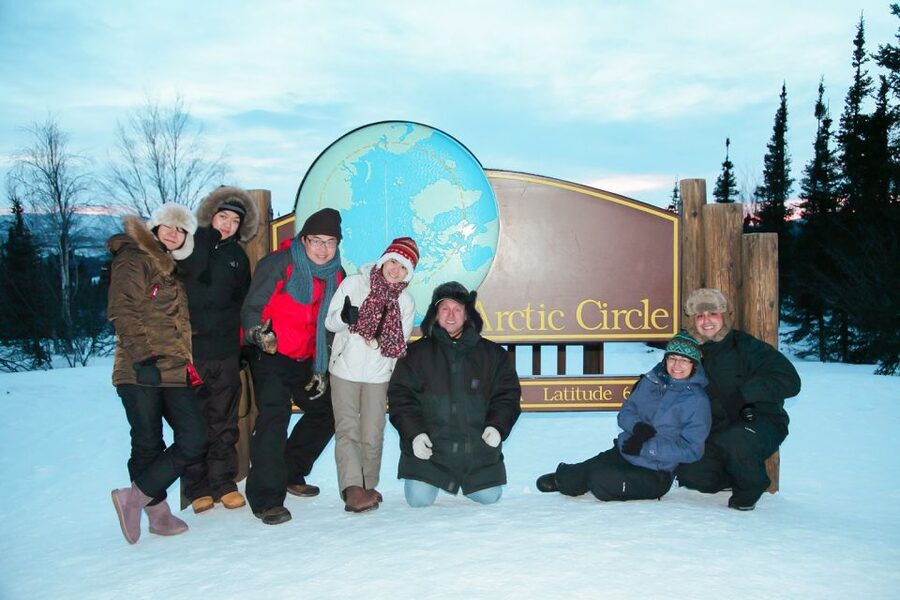
The Arctic Circle stop is the day’s clear milestone. At 66.5622 degrees north, you can take photos at the sign and receive your own certificate. It is a simple activity, but it gives the trip a satisfying sense of purpose.
You are standing at a line that marks a major change in daylight patterns. North of the Arctic Circle, the sun can remain above the horizon for an entire day in summer and remain below it for an entire day in winter. The experience becomes more meaningful when your guide explains what that latitude means rather than simply handing you a certificate.
The exact timing can vary. Some groups reached the Circle around 10 PM, while others arrived earlier or later depending on pickup, road conditions, and stops. Certificates are provided, though names may be handwritten rather than printed. Bring your passport or another form of identification, as requested for the tour.
This is also one of the possible Aurora viewing spots. A few groups were lucky enough to see the Northern Lights near the Arctic Circle itself, which makes the stop feel almost tailor-made for an Alaska memory. Still, the lights depend on cloud cover and solar activity, not on the tour schedule.
Hunting the Northern Lights on the return drive
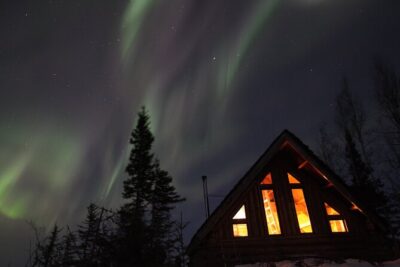
The Aurora portion begins after dark, often during the long drive back to Fairbanks. Your guide watches the sky and may stop at more than one location when conditions look promising. Several outings included two or more viewing stops, and some groups received a generous amount of time for photographs.
That flexibility is one of the tour’s strongest features. A guide who simply follows a fixed schedule may miss a short display. Guides such as Ash, Paul, Elijah, Jake, and Ryan were praised for changing plans, searching for clearer skies, helping with camera phones, and taking group photos.
The lights are caused by charged particles colliding with atoms high in the atmosphere. You do not need a science lesson to enjoy them, but understanding the basic reason for the display adds meaning to the wait.
You should also set your expectations correctly. The Aurora is a natural event and cannot be guaranteed. Several outings had cloud, fog, or rain, and some people returned without seeing it. One group saw lights through heavy cloud only because the guide kept looking for a workable spot. Another group did not see anything despite a serious effort.
That is the central risk of booking this trip. You are paying for access, transport, guiding, and repeated chances to look at the sky. You are not buying a guaranteed light show.
Photos, certificates, and the small touches
Guides often help with photos, and this can be a real benefit in the dark. They may know how to position you, use a phone camera, or find a better angle near the Arctic Circle and Aurora stops. Some guides shared photos afterward, which saves you from returning home with only blurry snapshots.
You receive an Arctic Circle certificate, and an Aurora certificate is also included. These are modest souvenirs, but they help mark two different parts of the trip. The Circle certificate records where you went. The Aurora certificate celebrates what you hoped to see, even though the sky may not cooperate.
The food is another welcome touch. Sandwiches, sweets, and hot drinks are included, and the homemade sandwiches received repeated praise. This is not a restaurant tour, but the food helps you get through a day when normal meal times disappear.
Is $320 a fair price?
At $320 per person, this is not a cheap excursion. The value depends on what you would otherwise need to arrange yourself. You get hotel pickup and drop-off, a driver-guide, the Arctic Circle and Yukon River route, pipeline commentary, food, certificates, and an organized Aurora search.
The price makes more sense if you have limited time in Fairbanks and want to combine several northern sights in one day. It also helps if you do not want to drive a rough winter highway at night or manage a long return route while watching the sky.
The value is weaker if your main goal is only the Northern Lights. You could spend less on a shorter Aurora outing, though that would not take you to the Arctic Circle or Yukon River. It is also a poor fit if you dislike long vehicle rides, uneven roads, or unpredictable weather.
I see the $320 as fair for an ambitious, all-in-one northern road trip, provided you accept the comfort limits and the lack of an Aurora guarantee.
Who should book this 14-hour adventure?
I would recommend it to you if you want a major Alaska story rather than a quick evening activity. It suits people who enjoy road trips, remote scenery, local history, engineering, and the excitement of waiting for nature to perform.
It is also a good fit for visitors with only a few days in Fairbanks. You can cover the pipeline, Yukon River, Finger Mountain, Arctic Circle, and Aurora search without arranging separate transport.
You should think twice if you are traveling with very young children. The tour is not suitable for children under five, and the long day can be hard on anyone who needs regular sleep or easy access to facilities.
Dress for serious cold, even if the forecast looks manageable. Wear warm base layers, insulated outer clothing, gloves, a hat, and sturdy winter footwear. The supplied details do not list gear rental, so you should arrive prepared rather than count on the van to solve the problem.
Should you book the Arctic Circle and Northern Lights tour?
Book it if crossing the Arctic Circle matters to you and you want the chance to see the Aurora without driving the Dalton Highway yourself. The guides are the great strength, especially when they add stories, handle rough roads, take photos, and keep searching under difficult skies.
Skip it if you want a relaxed day, a smooth ride, or a guaranteed Northern Lights display. The road is rough, the hours are long, and cloud can erase the main event.
For the right person, this is a memorable Alaska challenge: part road trip, part science lesson, part cold-weather endurance test, and, with luck, a spectacular night beneath the Aurora.
FAQ
How long does the tour last?
The listed duration is 14 hours. Depending on road conditions and time spent viewing the Aurora, some outings may last 15 or 16 hours. Return to Fairbanks is generally around 3 AM.
Where does hotel pickup take place?
Pickup and drop-off are available from major hotels within Fairbanks city limits. Pickup is not provided from Airbnbs or private residences.
Is the Northern Lights display guaranteed?
No. The Aurora is a natural phenomenon, so cloud, fog, rain, and solar conditions can prevent a sighting. There is no refund if the Northern Lights are not visible.
What food and drinks are included?
The tour includes sandwiches, sweets, and hot drinks. Water and snacks may also be available during the journey.
Are children allowed on the tour?
Children under five are not permitted on this activity.
What should I bring?
Bring a passport or ID card and dress for very cold conditions. Warm layers, insulated clothing, gloves, a hat, and suitable footwear are important for the outdoor stops.
Just added around Fairbanks
- Spectacular Chena Hot Springs Northern Lights Experience★ 5.0 · 29 reviews
- Northern Lights at Chena Hot Springs★ 4.0 · 4 reviews
- Capturing the Ethereal Beauty: Northern Lights Photo Workshop★ 5.0 · 5 reviews
- Northern Lights Aurora Tour with Photography★ 5.0 · 2 reviews
- Northern Lights(Aurora) Tour with Photography and Karaoke on car!★ 5.0 · 9 reviews
- Amazing Aurora Chasing Experience.★ 5.0 · 5 reviews
- Luxury RV Small Group Aurora Chasing Tour with Photography★ 4.5 · 6 reviews
- Northern Lights Experience and Cabin Dinner★ 5.0 · 23 reviews
Fairbanks Northern Lights Tours, compared.
SkyChase™ | Northern Lights Experience – Free Photography & More
Read our review →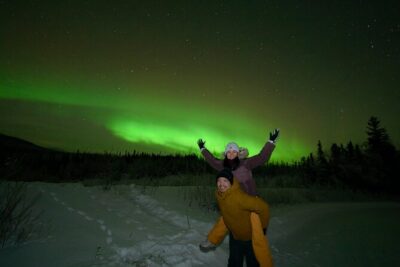
Northern Lights Aurora Tour with FREE Photography
Read our review →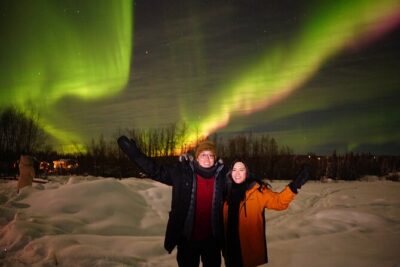
Northern Lights (Aurora Borealis Viewing) Chasing with Photography in Fairbanks
Read our review →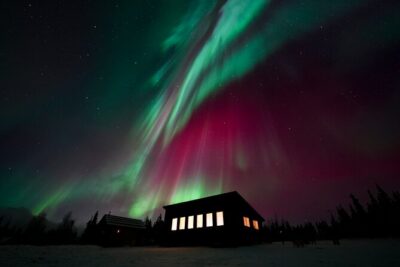
Mountaintop 360° Best Alaskan Cabin with Photography @Aurora Camp
Read our review →
Aurora Viewing – Aurora Husky Lodge , Great view from top of the ridge
Read our review →Browse the lists this tour appears in